
Course fees
£570.00
20 May 2027 (Available)
Apply by: 06 May 2027
May 2027
Online (10am-4pm)
Attendance dates: 20 May 2027, 21 May 2027
Accredited by

Course overview
The aim of the Intimate Partner Violence and Abuse (IPVA) Course is to critically reflect on your practice and enhance knowledge of coercive control.
The course is aimed at all professionals in professional roles who come across and support and seeks to address the needs of those working in a wide variety of fields who come across victim/survivors of IPVA. It is intended for practitioners and leaders within Health and Social Care and the Criminal Justice settings who have responsibilities for supporting victims/survivors and/or signposting, and those in leadership roles who lead/manage people who support those experiencing IPVA.
100% attendance is mandatory.
The Domestic Abuse Act 2021 has a range of responsibilities for different professionals, including:
- Local authorities who have a duty to provide support to victims of domestic abuse including:
- assessing support need, delivering a domestic abuse strategy and providing support for children, counselling and therapy, housing-related advice and support, and specialist support for victims with complex needs.
- General practitioners who should have a clear protocol in place for dealing with domestic abuse.
- Social workers who should take into account and address the needs of children who live with domestic abuse, as well as the needs of the main victim.
- Employers who should be aware of the impact of domestic abuse on employees at work.
- Police who have responsibility for responding to calls and investigating incident.
To undertake these activities, it is incumbent upon professionals to have clear understanding of IPVA and what constitutes coercive control. IPVA comes under the umbrella of domestic abuse and considers abuse between so-called romantic and/or sexual partners.
Overview of course
Key topics covered in this unit are:
- Domestic Abuse Act 2021
- The social context - Age, Culture, Race and Religion, Gender and Sexuality, Disability and their intersectionality
- Application to theories and models - Including The Duluth model, The Homicide Timeline, Social Construction
- Exploration of coercive controlling behaviours
- Short, medium and long-term effects of experiencing IPVA - Impact on Children
- Support and Safeguarding - Legislation, Managing risks, safety planning and sign posting
Teaching
This course is taught virtually and will consist of online blended learning and teaching methods.
Assessment
This is a non-accredited course and therefore there is not an associated assessment. If you wish to do the accredited version of this course (worth 20 level 7 credits) please click here.
Course details
Course leader
Orlanda Harvey (harveyo@bournemouth.ac.uk) & Louise Oliver (LOliver@bournemouth.ac.uk)
Course delivery
Online
Downloads
Prerequisites
Why choose BU?
Bournemouth Gateway Building is the home of the Faculty of Health and Social Sciences. Its 10,000 square metres of space has created a unified base for the faculty’s education, research and office activities, which previously took place across several buildings in the Lansdowne area. It is open and accessible to all BU students, staff and the community.
We have a long and close association with health and social care practice partners across the region and enjoy close relationships with Dorset Healthcare University Foundation Trust, University Hospitals Dorset and District Hospitals (Yeovil and Salisbury) and Dorset County Hospital.
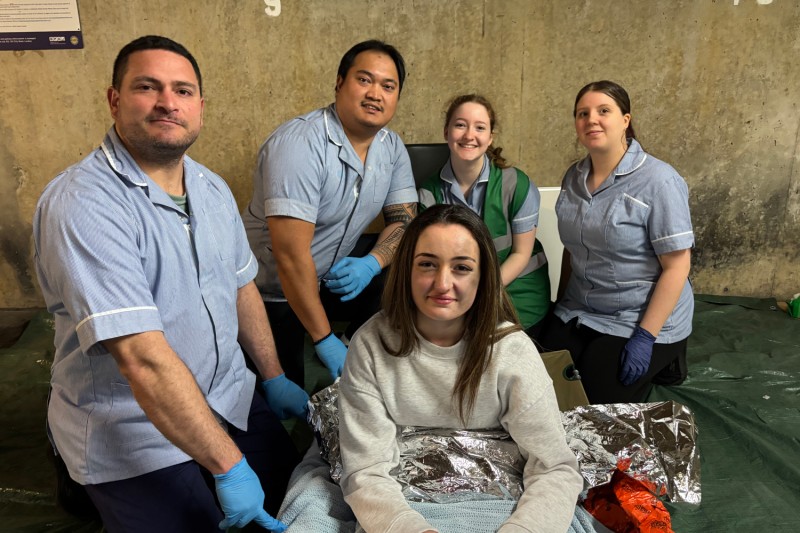
We are an established, vibrant and supportive academic community of staff, clinical practitioners, students and service users. Our team of highly qualified nursing staff and social scientists are committed to developing the next generation of outstanding, skilled and compassionate practitioners, having been engaged in developing the nursing workforce for over 25 years.

Make an enquiry
Make an enquiry